Introduction
If you have noticed your child moving differently at home compared to when you are out and about, you are not alone. Many UK parents spot this contrast and find it puzzling. Child toe walking indoors only is a recognised pattern, and the reasons usually sit in the differences between indoor and outdoor environments rather than in walking ability itself. Families seeking further understanding of movement patterns and sensory development may benefit from professional support to identify contributing factors and practical strategies. This guide focuses specifically on why this contrast happens, what your child’s feet are responding to and how to gently encourage flat footed walking at home.
The Indoor and Outdoor Split: What Parents Notice
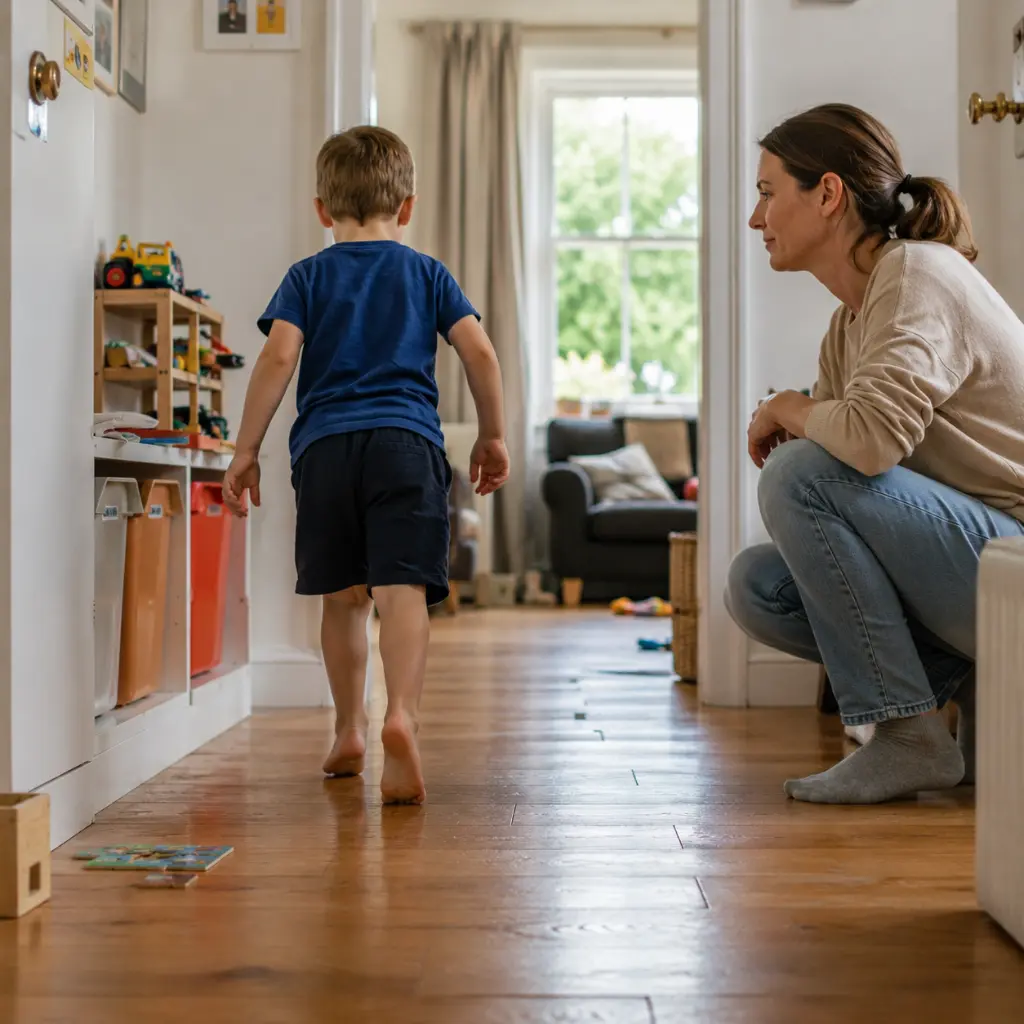
Parents often describe the same scene. The shoes come off, the front door closes, and within moments their child is bouncing along on tiptoes through the hallway. Outdoors, with shoes laced and pavement underfoot, the same child walks with a smooth heel to toe pattern. Recognising that this is a setting based pattern, not a walking ability problem, helps shift the focus toward the environment itself.
Why the Two Settings Feel So Different to Your Child
Your child’s feet receive very different information depending on where they are walking. Understanding these differences is the key to making sense of toe walking indoors, not outdoors.
Surface Texture and Temperature
Indoor floors are often smooth, cool, slippery or unexpectedly warm. Tiles can feel cold underfoot, laminate can feel slick and underfloor heating can make certain spots uncomfortable. Lifting the heels reduces the surface area in contact with the floor, which gives some children instant relief from sensations they find unpleasant.
Footwear Versus Bare Feet
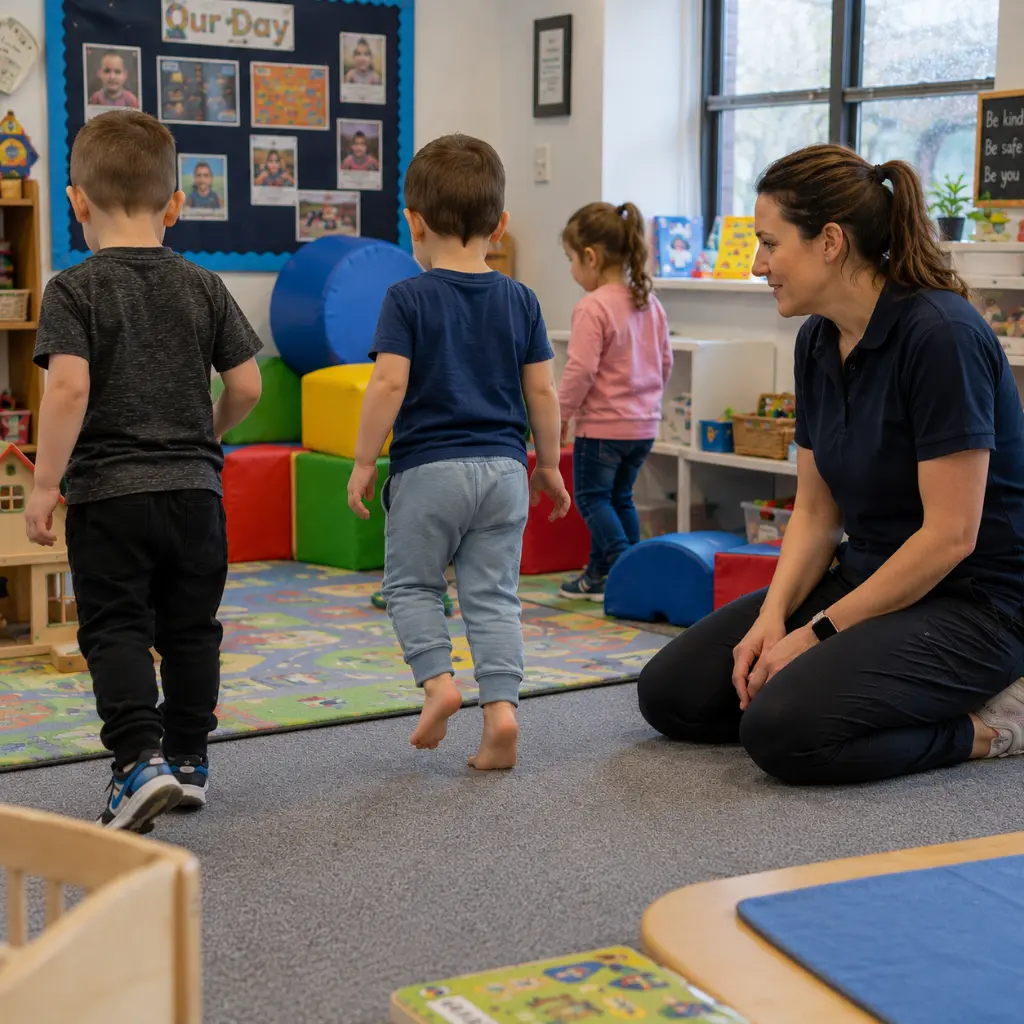
Outdoors, shoes hold the foot in a flatter, more stable position. The sole encourages heel contact with every step. Indoors, most children are barefoot or in socks, leaving the foot free to rise onto the toes. Socks on wooden or tiled floors can even add a slippery quality that reinforces tiptoeing for balance.
Speed, Distance and Purpose
Outdoor walking tends to involve longer distances, a steady pace and clear destinations such as the school gate or the park. Indoor movement is usually short, bouncy and playful. Children dart between rooms, leap onto sofas and rush toward toys. Tiptoeing fits this lively, stop start movement far more naturally than a measured heel-to-toe gait.
Sensory Input the Body Is Seeking
Walking on the toes activates the calves and ankles strongly, sending rich proprioceptive feedback through the lower legs. Many children seek this input when they are excited, relaxed or absorbed in play. Outdoors, the body already receives plenty of sensory input from uneven ground, wind, sights and sounds, so the same need to tiptoe does not arise. Children who are sensitive to certain sensory experiences, such as clothing textures or floor surfaces, may also respond differently to walking barefoot or wearing particular types of footwear indoors.
Why Outdoor Walking Looks So Different
Outdoor environments quietly do a lot of the work for your child’s gait. Several factors come together to encourage flat footed walking outside.
Structured Footwear
Supportive footwear such as trainers, school shoes and wellies can help encourage a more stable walking pattern. The structure around the heel and ankle provides gentle guidance that may reduce the tendency to walk up on the toes during everyday movement. Well-fitted shoes also improve overall foot stability and confidence on different surfaces.
Slopes, Kerbs and Uneven Paths
Outdoor walking constantly challenges balance. Negotiating kerbs, slopes and uneven paths naturally invites a flat foot landing because it is more secure. The feet adapt to the demands of the environment without conscious effort.
A Calmer Pace
Journeys to school, local shops or nearby parks often follow a slower and more predictable walking rhythm. A steady pace gives children more time to organise their movements and use a consistent heel-to-toe walking pattern. Regular outdoor walking routines can gently reinforce more balanced movement habits over time.
Is This Pattern Always a Concern?
In many cases, walking on tiptoes only indoors is a comfort and sensory based habit rather than a sign of a deeper issue. The fact that your child walks flat footed outside is genuinely reassuring. It shows the ankles, calves and balance systems are working well together when the environment calls for it. A closer look may still be helpful if you notice tightness, pain or wider concerns, but the indoor only pattern itself is often less worrying than constant toe walking in every setting. If a child also reports discomfort alongside toe walking, hip or lower limb pain may be worth assessing separately, as this can sometimes influence foot positioning and movement patterns.
Practical Ways to Encourage Heel Contact
Small, playful adjustments to the indoor environment can gently invite more heel-to-toe walking. The aim is to make the home feel a little more like the outdoors in the ways that matter for your child’s feet.
Add Texture Underfoot
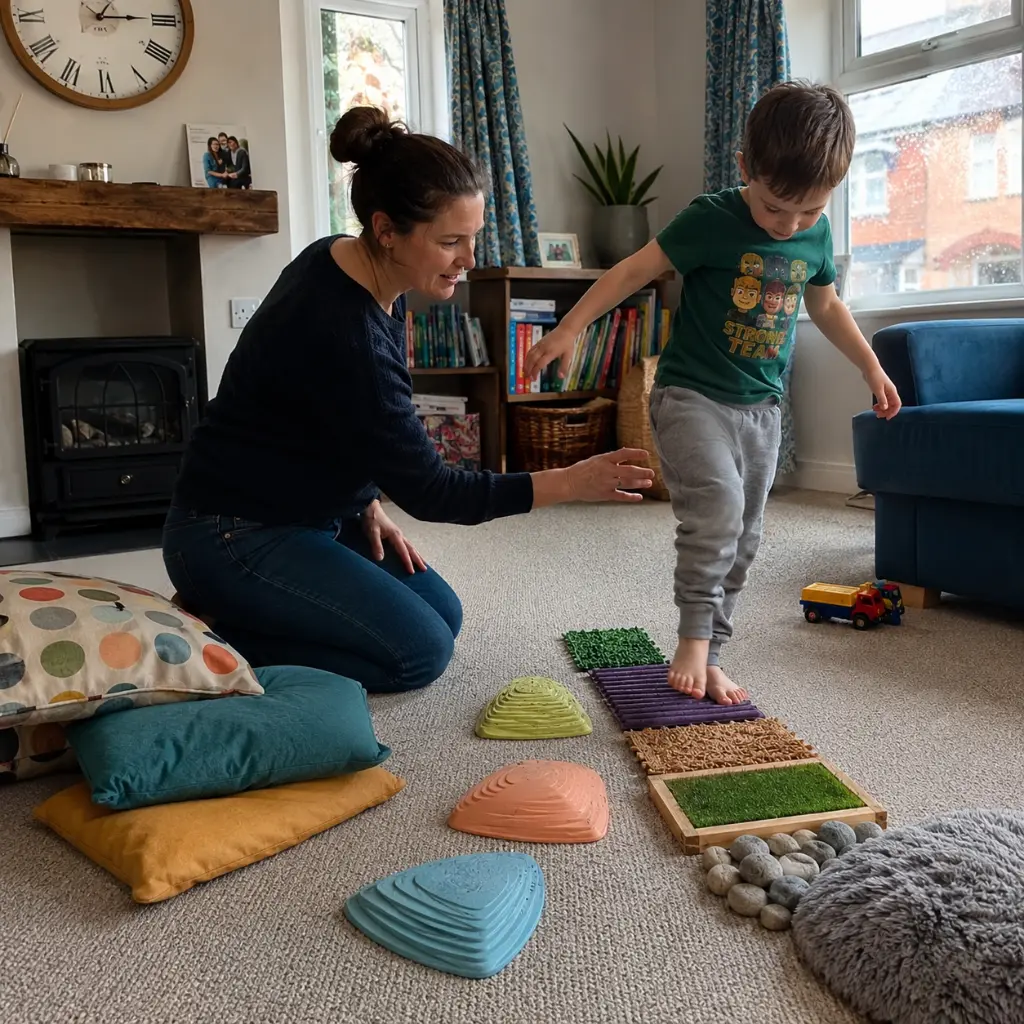
Rugs, foam mats or textured play tiles change how the floor feels. A short path of different textures from the front door to the living room offers grounding sensory input as your child moves through the house.
Create Indoor Walking Routes With Purpose
Children tiptoe most during quick bursts of play. Build little walking errands into the day, such as carrying laundry to the bedroom or delivering a snack to a sibling. Purposeful walking encourages a steadier gait than excited darting.
Use Steps and Climbing Indoors
Indoor climbing activities encourage natural changes in foot position and weight distribution. Cushions used as stepping stones, soft play slopes, a small slide or stairs with a handrail can all promote more consistent heel contact during movement. These activities also support balance, coordination and lower limb strength in a playful setting.
Play Heel Focused Games
Children often respond best when movement practice feels like play rather than exercise. Marching like a soldier, stomping like a dinosaur or copying exaggerated heel-to-toe steps during follow-the-leader games can increase heel awareness in an enjoyable and low-pressure way. Music, rhythm and imaginative play can make these activities even more engaging for younger children.
How PT Kids Supports Children With Toe Walking Patterns
PT Kids offers paediatric physiotherapy across the UK for children whose toe walking patterns need a closer look. An assessment considers the full picture, including ankle flexibility, calf muscle length, balance, posture and the sensory factors behind the indoor pattern. From there, a tailored home programme is built around your child’s daily routine, with activities that fit naturally into family life. Early input often prevents tightness from developing and supports lasting changes in walking confidence.
Conclusion
When your child walks on their toes indoors but not outdoors, the home environment is usually telling the story. Differences in surface, footwear, pace and sensory input all shape how the feet respond. Encouraging small changes at home can make a real difference, and most children adjust well with time and gentle support. If the pattern continues or concerns grow, PT Kids is here to help families across the UK with paediatric physiotherapy designed around each child’s needs.